
The Ultimate Grocery Store Strategy to Cut Your Food Bill in Half
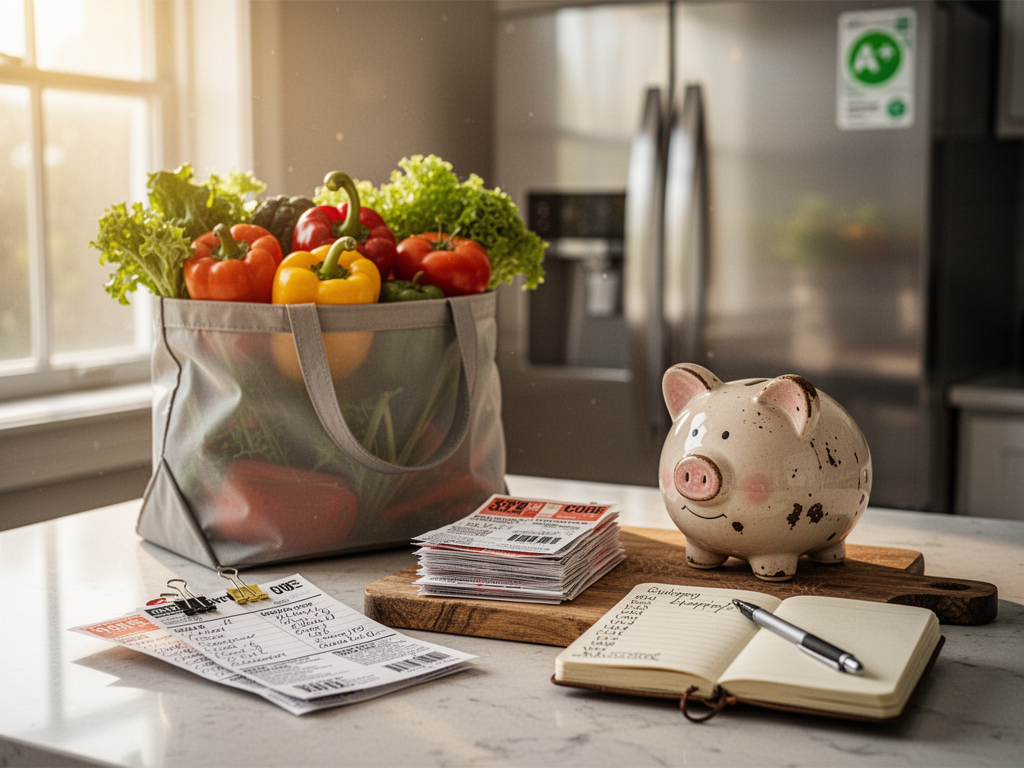
You're standing in the checkout line, watching the total climb higher and higher. $147.83. For one week of groceries. Again. Sound familiar? Here's the truth: you're probably overpaying at the grocery store, but simple shopping strategies can slash your food bill in half starting this week. I'm not talking about eating ramen every night or clipping coupons for hours. This is about working smarter, not harder. And yes, it actually works.
The average American family spends about $1,000 per month on groceries. That's $12,000 a year. What if you could cut that in half and pocket an extra $6,000 annually? That's a vacation. A car payment. A serious chunk of your emergency fund. Let's get into it.
The Essential Tools & Mindset for this Strategy
Before you step foot in another grocery store, you need to set yourself up for success. This isn't complicated, but it does require a few simple things:
- A price tracking app or notebook – You need to know what things actually cost at different stores. I use a simple notes app on my phone.
- Meal planning template – Nothing fancy. A piece of paper divided into seven days works perfectly.
- Store loyalty cards – Free money. Period. Sign up for every single one at stores you visit.
- A calculator or phone – For comparing unit prices on the spot.
- Reusable shopping bags – Some stores give discounts for bringing your own bags.
- The right mindset – This is crucial. You're not being cheap. You're being intentional with your money.
The mindset shift is honestly the most important part. Stop thinking of grocery shopping as a chore you rush through. Start seeing it as a game where you win by keeping more of your hard-earned cash.
Time vs. Financial Investment
Let's be real about what this takes. The first week requires about 2-3 hours of setup. You'll spend time creating your meal plan, checking multiple store ads, and building your price knowledge base. It feels like work at first.
But here's the thing: after that initial investment, you're looking at maybe 30-45 minutes per week for planning and strategic shopping. That's less time than you probably spend scrolling social media each day.
The financial payoff? Most families save $200-400 per month once they implement this system consistently. That's $2,400 to $4,800 per year. For a family spending $1,000 monthly on groceries, you're looking at legitimately cutting your bill in half within 2-3 months of refining your approach.
Do the math: if you save $300 monthly and invest just 3 hours that first week plus 45 minutes weekly ongoing, you're earning roughly $100 per hour of effort in the first month alone. Show me another "side hustle" with that kind of return.
Step-by-Step Action Plan
Ready to actually do this? Here's exactly how to implement this strategy, broken down so anyone can follow it.
Track Your Current Spending
You can't improve what you don't measure. For the next week, save every single grocery receipt. Every coffee run, every "quick stop" for milk, everything. Write down what you spent and where. This creates your baseline. Most people are shocked when they see the real number. I know I was. We thought we spent about $600 monthly. It was actually $982.
Build Your Core Meal Rotation
Sit down and list 10-12 meals your family actually eats and enjoys. Not Instagram-worthy recipes you'll make once. Real food you eat regularly. Spaghetti. Tacos. Chicken and rice. Stir fry. Whatever works for you. This becomes your rotation. The goal is to stop reinventing the wheel every single week.
Create a Master Grocery List
Based on your core meals, write out every ingredient you need. Organize it by store section (produce, meat, dairy, pantry). This list becomes your template. You'll modify it slightly each week, but the foundation stays the same. This alone saves 20 minutes of wandering around wondering what you need.
Learn the Price Per Unit Game
This is where real savings happen. Grocery stores display unit prices on shelf tags (price per ounce, per pound, etc.). Always check this, not just the total price. A 32-oz jar for $4.99 might seem expensive compared to a 16-oz jar for $2.99, but the unit price tells the real story. The bigger jar is often cheaper per ounce. Train yourself to look at these numbers automatically.
Shop Multiple Stores Strategically
Controversial opinion: shopping at just one store costs you money. But I'm not saying visit five stores weekly. Here's the smart approach: identify 2-3 stores with different strengths. Aldi or Walmart for pantry staples and basics. A regular grocery store for sales and variety. Maybe Costco for specific bulk items if you have membership. Plan your route efficiently and hit them strategically.
Time Your Shopping Around Sales Cycles
Grocery stores run on predictable cycles. Meat goes on sale weekly, rotating through chicken, beef, and pork. Stock up when your protein of choice hits the low price, then freeze it. Most items go on a 6-8 week sale rotation. Once you track this for a month or two, you'll know when to buy what. Never pay full price for anything you use regularly.
Embrace Strategic Stockpiling
When items you use regularly hit rock-bottom prices, buy multiple. Not hoarding. Strategic stockpiling. If pasta is normally $1.50 but drops to $0.79, buy 10 boxes. You'll eat it eventually, and you just saved $7.10 for literally 30 seconds of effort. This requires a small amount of storage space but pays off massively.
Plan Meals Around What's Actually Cheap This Week
Flip your planning process. Instead of deciding you want chicken parmesan then buying chicken regardless of price, check what protein is on sale first. Then build your meals around that. Pork chops are $1.99/lb this week? Great. We're having pork chops, pulled pork, and pork fried rice. This single shift can cut your meat costs in half.
The Real Financial Impact
Let's talk real numbers from real implementation. When you consistently apply this strategy, here's what typically happens:
Month 1: You save about 20-25% as you learn the system and start implementing the basics. For a $1,000/month grocery budget, that's $200-250 saved.
Month 2-3: Savings increase to 30-40% as you get better at timing, know store patterns, and have a stockpile building. You're now saving $300-400 monthly.
Month 4+: Many families stabilize at 40-50% savings once fully optimized. That $1,000 monthly bill is now $500-600. The same food. The same (or better) quality. Half the cost.
But here's where it gets interesting. Take that $400 monthly savings and invest it in a basic index fund averaging 8% annual return. In 10 years, you've got roughly $73,000. In 20 years? Nearly $236,000. From grocery shopping smarter. That's the real impact nobody talks about.
Alternative Budget-Friendly Approaches
Not everyone's situation is identical. Here's how to adapt this strategy for your life:
For singles or couples: The principles work the same, but your focus shifts to smaller packaging and preventing waste. Buy smaller quantities more frequently for produce. Focus heavily on store brands and sales. Consider splitting bulk purchases with a friend or family member.
For large families: Bulk buying and meal prep become even more critical. Costco or Sam's Club memberships usually pay for themselves quickly. Cook double batches and freeze half. Embrace cheaper proteins like whole chickens (learn to break them down yourself) and dried beans.
For apartment dwellers with limited storage: Focus on rotating stockpiles of just 3-4 staples instead of everything. Get creative with storage (under beds, top of closets). Prioritize non-perishables with the best price-per-unit savings for your limited space.
For those without cars: Online grocery pickup or delivery can actually save money if it prevents impulse purchases. Compare the fees versus your typical overspending. Use store apps to plan before you go, making each trip ultra-efficient.
For strict dietary needs: This strategy works for gluten-free, vegetarian, keto, whatever. The principles don't change. You're just tracking different items and different sales cycles. Join online communities for your specific diet to learn which stores and brands offer the best values.
Pro Tips for Maximum Savings
Shop alone and on a full stomach. Bringing kids or a hungry spouse increases your bill by 20-30% on average. Grab a snack first. Leave the family at home when possible. It sounds harsh, but it's effective.
Use the "price per meal" calculation. When planning, calculate actual meal cost. A $12 whole chicken becomes 3-4 meals for a family. That's $3-4 per meal. A $6 bag of chicken breasts is 2 meals, or $3 per meal. Suddenly the whole chicken is the same or better value, plus you get bones for stock. This perspective shift changes everything.
Befriend store managers and butchers. Seriously. Learn when they markdown meat and produce (usually early morning or evening). Ask the butcher about manager's specials or bulk discounts. Building these relationships has saved me hundreds. They'll often hold markdowns for you or cut meat to your specifications to avoid waste, passing savings to you.
Create a "price book" for your top 20 items. Write down what you pay for the things you buy most (milk, eggs, bread, coffee, etc.). Update it when you find better prices. This makes it instantly clear when something's actually a good deal versus fake sale pricing. No mental math required in the store.
Common Mistakes to Avoid
Even with the best strategy, people sabotage themselves. Here are the big ones:
Buying "deals" on things you don't actually use. A sale is only a deal if you were going to buy it anyway. That 50% off artichoke hearts sounds great until they sit in your pantry for two years. Stay disciplined to your list.
Not accounting for waste. Buying a giant bag of spinach because the unit price is better doesn't save money if half of it goes bad. Be honest about what you'll actually consume. Sometimes the smaller package is the smarter purchase.
Ignoring store brands. The name-brand loyalty trap costs families thousands annually. At least 70% of store brands are literally identical to name brands, made in the same facilities. Try them. If you genuinely hate it, switch back. But you'll probably save 30-40% with zero quality difference.
Shopping without a list. Every time. Every. Single. Time. Studies show you'll spend 20-30% more without a list. Those impulse purchases destroy your savings. Make the list. Bring the list. Follow the list.
Forgetting to check your pantry first. Buying duplicates of things you already have is pure waste. Do a quick inventory before planning your meals and making your list. I once had four jars of minced garlic because I kept forgetting to check.
Not adjusting for seasonality. Strawberries in January cost triple what they do in June. Eating seasonally and locally when possible dramatically cuts produce costs. Learn what's in season when, and plan accordingly.
Long-Term Habit Maintenance
The strategy works, but only if you stick with it. Here's how to make this a permanent lifestyle change, not a temporary diet-like restriction:
Automate the planning. Set aside the same time every week for meal planning and list-making. Sunday afternoon works for many people. Make it routine, like brushing your teeth. You don't think about it, you just do it.
Track your wins. Keep a running total of money saved. Watching the number grow is incredibly motivating. Some people transfer their savings immediately to a separate account so they can literally see the money pile up. That visual reinforcement keeps you committed.
Allow for flexibility and treats. Build a small "fun money" line item into your grocery budget. Maybe $20-30 monthly for the fancy cheese or premium ice cream you love. Deprivation doesn't work long-term. Intentional choices do.
Involve the whole family. When everyone understands the goal (maybe you're saving for a vacation or paying off debt), they're more likely to support the strategy. Kids can help clip coupons or spot deals. Partners can tag-team the multi-store shopping.
Celebrate milestones. When you hit $500 saved, $1,000 saved, six months of consistency—acknowledge it. Maybe have a nice dinner out (budgeted, of course). Positive reinforcement makes habits stick.
Regularly reassess and optimize. Every 2-3 months, review what's working and what isn't. Prices change. Store policies change. Your family's needs change. Adapt the strategy accordingly. This isn't set-it-and-forget-it. It's an evolving system.
The Bottom Line
Cutting your grocery bill in half isn't about deprivation or spending your life chasing deals. It's about being strategic, intentional, and smart with your shopping. The formula is simple: plan your meals, know your prices, shop sales strategically, stockpile basics when cheap, and stay consistent.
Most families can realistically save $200-400 monthly within the first few months of implementing this approach. That's life-changing money for many households. It's debt payoff. It's savings. It's financial breathing room.
Start this week. Just pick three of these strategies and implement them on your next shopping trip. Track what you save. Then add another strategy the following week. Build the habit gradually, and watch your food costs plummet while your savings account grows.
The grocery store doesn't have to be a place where your money disappears. It can be where your financial transformation begins.
FAQs
How long does it really take to see significant savings?
Most people notice 20-25% savings within the first month just from basic implementation like meal planning and shopping sales. By month three, when you've built a stockpile and learned your stores' patterns, you'll typically hit 40-50% savings. The key is consistency. Don't get discouraged if week one isn't dramatic. This is a building process.
Can I really do this while eating healthy, organic food?
Absolutely, but your savings percentage might be slightly lower. Focus on the "Dirty Dozen" for organic produce (the items most important to buy organic due to pesticide levels) and go conventional for the "Clean Fifteen." Shop farmers markets at closing time for deals. Buy organic staples in bulk. The strategies work regardless of your food philosophy, you're just working with a different baseline price point.
What if I don't have multiple grocery stores nearby?
You can still save significantly with one store. Focus heavily on their sales cycles, use their loyalty program religiously, and buy store brands. Consider adding online options like Thrive Market or Amazon Subscribe & Save for specific shelf-stable items where they beat your local store's prices. The multi-store approach maximizes savings, but it's not mandatory for success.
Is extreme couponing worth the time investment?
For most people, no. Traditional extreme couponing requires 10-20 hours weekly for maybe $50-100 in actual usable savings after you filter out stuff you don't need. The strategies outlined here give you better returns for far less time. That said, if you enjoy it as a hobby and have the time, go for it. Just don't let it become a second job unless the math truly works for your situation.


