
The Secret Envelope System That Will Cure Your Impulse Buying Forever
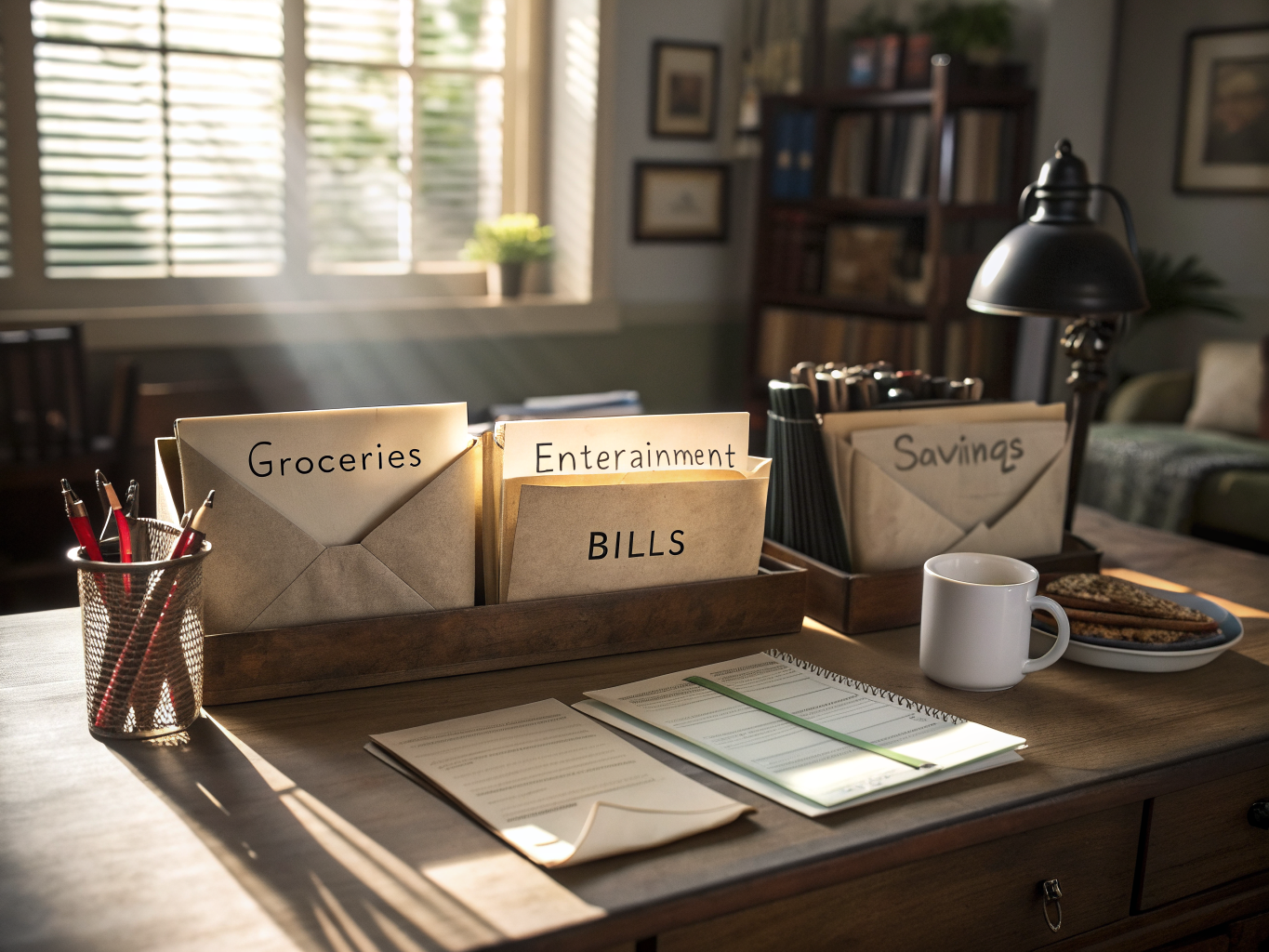
You're standing in Target, just "browsing." That cute throw pillow catches your eye. Before you know it, you've got $87 worth of stuff you didn't plan to buy. Sound familiar? You're not alone—studies show Americans spend an average of $314 per month on impulse purchases. That's nearly $3,800 a year! But here's the good news: there's a simple envelope trick that can rewire your spending habits for good and stop wasting money on impulse buys. It's old-school, it's tangible, and honestly? It works like magic.
The envelope system isn't some trendy financial hack that appeared on TikTok last week. It's been around for generations because it taps into something powerful: physical cash makes spending hurt more than swiping plastic. When you have to hand over actual bills, your brain registers the loss differently. You pause. You reconsider. You might even put that throw pillow back.
The Essential Tools & Mindset for this Strategy
Before we get into the nitty-gritty, let's talk about what you'll actually need. The beauty of this system is its simplicity. You don't need fancy apps or expensive planners.
- Physical envelopes (5-10 to start, plain ones work perfectly)
- A label maker or just a pen to write categories on each envelope
- Cash withdrawn from your bank account
- A safe place at home to store your envelopes
- A willingness to leave your debit card at home for certain shopping trips
- Honesty with yourself about your spending weaknesses
- Patience during the first month as you adjust to the new system
The mindset shift is crucial here. You're moving from invisible digital transactions to visible, tangible money. It'll feel weird at first. Maybe even a little inconvenient. But that slight discomfort is exactly what makes this work.
Time vs. Financial Investment
Let's be real about what you're signing up for. The initial setup takes about 30-45 minutes. You'll need to review your last month's bank statement, identify your impulse spending categories, and make your first cash withdrawal.
After that? Maybe 15 minutes per week to refill envelopes and track what you've spent. That's it.
Now for the payoff. If you're like most people spending $300+ monthly on unplanned purchases, cutting that by even 60% saves you $180 a month. That's $2,160 per year. In five years? You're looking at $10,800 that could've vanished into random Target runs, coffee shop visits, and online shopping carts.
Think about it this way: you're trading one hour of setup time and one hour per month of maintenance for the equivalent of a nice vacation every single year. Pretty solid return on investment.
Step-by-Step Action Plan
Identify Your Impulse Spending Triggers
Grab your bank statements from the past two months. Go through every transaction. Be honest and a little ruthless here. Highlight everything you bought without planning ahead. Not your rent or car payment—those don't count. We're talking about the clothing you bought while "just looking," the extra groceries that weren't on your list, the gadgets, the subscription you forgot about, the takeout when you had food at home.
Group these impulse buys into categories. Common ones include: dining out, clothing, entertainment, coffee/drinks, hobby supplies, home décor, and online shopping. Your categories will be personal to you, and that's perfect.
Set Realistic Budget Limits
For each category, decide on a monthly cash limit. Don't go crazy restrictive here—you'll just rebel against your own system. If you've been spending $200 on dining out, maybe start with $120. That's still a meaningful reduction without feeling like punishment.
Write down each category and its monthly limit. This is your envelope budget.
Get Your Cash and Set Up Your Envelopes
Head to your bank or ATM. Withdraw the total amount you've budgeted across all categories. Yes, it might feel weird carrying more cash than usual. That's okay.
Label each envelope with its category and monthly limit. Divide your cash accordingly. If you're doing this mid-month, pro-rate the amounts for the remaining weeks.
Store these envelopes somewhere secure at home. A locked drawer, a small safe, or even a dedicated box works great.
Commit to Cash-Only for These Categories
Here's where the rubber meets the road. When you go shopping for anything in your envelope categories, you bring only that envelope. Leave your cards at home. Seriously.
If you're going to Target and you tend to overspend on home stuff, bring only your "home décor" envelope with whatever cash is left in it. When it's gone, it's gone. No borrowing from other envelopes (at least not in the first month—we'll talk about flexibility later).
Track What's Working
Each time you spend from an envelope, jot down the amount and what you bought on the outside. This takes literally 10 seconds. At the end of the week, check your envelopes. Notice which ones are emptying fast and which ones have cash left over.
This isn't about shame or perfection. It's about awareness. You're retraining your brain to see spending clearly.
The Real Financial Impact
The immediate impact is obvious: you can't overspend what you don't have. But the deeper transformation happens in your brain.
Research from MIT shows that paying with cash activates the pain centers in our brain more than using credit or debit cards. You literally feel the loss more acutely. Over time, this creates new neural pathways. You start questioning purchases before making them. You develop what financial experts call "spending friction"—a healthy pause between wanting something and buying it.
Let's run some numbers. Say you cut impulse spending from $314 monthly to $120. That's $194 saved per month, or $2,328 yearly. If you invested that savings in a simple index fund averaging 8% returns, in 10 years you'd have about $35,350. In 20 years? Over $112,000. From just being more intentional about impulse buys.
But here's what might matter more than the numbers: the freedom. You stop feeling guilty after shopping trips. You know exactly what you can spend without derailing your other financial goals. That peace of mind? Priceless.
Alternative Budget-Friendly Approaches
The classic envelope system works beautifully, but it's not one-size-fits-all. Here are some variations for different situations.
For the Mostly-Digital Person: You can create a hybrid system. Use apps like Goodbudget or Mvelopes that recreate the envelope system digitally. You still set category limits and "move" money between virtual envelopes, but you can use your debit card. The visual representation still creates some spending friction, though admittedly less than physical cash.
For Families: Create a shared "family fun" envelope that everyone can see. Kids old enough to understand money can even help manage it. This teaches them budgeting while controlling family impulse spending on activities, treats, and entertainment.
For Safety-Conscious Folks: If you're uncomfortable carrying cash, use the envelope system just for online shopping. When you want to buy something online, you have to "pay yourself" from the appropriate envelope first—physically move that cash to a "spent" envelope, then make the digital purchase. The physical act still creates the important mental friction.
For Apartment Dwellers Without Safe Storage: Keep smaller amounts in envelopes and refill weekly instead of monthly. Store them in a less obvious spot, like inside a book on your shelf or in a kitchen canister.
Pro Tips for Maximum Savings
The 24-Hour Rule Envelope: Create a special "hold" envelope. When you want to make an impulse purchase, put the cash you would've spent into this envelope instead and wait 24 hours. If you still want the item tomorrow, buy it. Most times? You'll forget about it and keep the cash.
Visual Motivation: Tape a picture of your financial goal (vacation, debt payoff, emergency fund) to your wallet or envelope box. When you're tempted to overspend, you'll see what you're really choosing between.
The Rollover Reward: Any cash left in envelopes at month's end goes into a "reward" envelope. Once it hits a certain amount (say $100), spend it guilt-free on something you really want. This keeps you motivated and prevents feeling deprived.
Accountability Partner: Tell someone you trust about your envelope system. Share your weekly wins. Humans are social creatures—we're way more likely to stick with habits when someone else knows about them.
Common Mistakes to Avoid
Setting unrealistic limits is mistake number one. If you go from $300 monthly dining out to $50, you'll probably crack within a week. Start with a 30-40% reduction and adjust from there.
Borrowing from other envelopes too frequently defeats the entire purpose. Yes, emergencies happen. But if you're constantly robbing your "clothing" envelope to fund "dining out," your budget limits are wrong. Adjust them rather than constantly breaking your own rules.
Not tracking your spending within each envelope means you'll have no idea what's working. Those 10 seconds of writing down each purchase are crucial for building awareness.
Giving up after one bad week is perhaps the biggest mistake. You will mess up. You'll overspend. You might forget an envelope at home and use your card. That's not failure—that's learning. Start fresh the next day.
Making too many categories creates confusion. Start with 3-5 of your biggest impulse spending areas. You can always add more later.
Long-Term Habit Maintenance
The first month is the hardest. You're building new neural pathways and breaking old habits. Expect to feel some resistance.
By month three, it starts feeling normal. You'll automatically think "do I have cash in that envelope?" before shopping. This is where the magic happens.
To maintain this long-term, reassess your categories and limits every three months. Your life changes, and your budget should too. Maybe you've kicked your online shopping habit and can reduce that envelope while increasing your entertainment budget.
Build in flexibility for special occasions. Your birthday month? Add a little extra to your envelopes. The holidays? Plan ahead with increased limits rather than abandoning the system entirely.
Celebrate your wins visibly. Keep a simple chart showing how much you've saved each month. Watch it grow. Share it with your accountability partner. Let yourself feel proud.
Remember why you started. When the system feels tedious, reconnect with your bigger financial goals. Are you trying to kill debt? Build an emergency fund? Save for a house? The envelope system isn't the goal—it's the tool that gets you there.
The Bottom Line
The envelope system works because it makes spending visible and finite. You can't swipe away money you haven't physically allocated. It's simple, it's proven, and it doesn't require fancy apps or financial expertise.
Will it cure your impulse buying overnight? No. But give it three solid months, and you'll rewire how your brain approaches spending. You'll save thousands per year. You'll feel more in control of your money than you have in years.
Start this week. Not next month when things "settle down." Grab five envelopes right now. Label them. Tomorrow, hit the ATM. By this weekend, you'll be living differently with your money.
Your future self—the one with an emergency fund, less stress, and maybe a vacation planned with actual saved money—will thank you.
FAQs
What if I do most of my shopping online?
You can still make this work. When you want to buy something online, physically remove that cash from the appropriate envelope and set it aside in a "spent" envelope or deposit it back into your bank. The key is making yourself go through the physical act of handling the cash before clicking "purchase." Some people even keep their envelopes next to their computer as a visual reminder.
How do I handle emergencies if all my extra money is in envelopes?
The envelope system is only for discretionary, impulse-prone spending categories. You should still have your regular checking account for bills, groceries, and true emergencies. Some people also create an "emergency" envelope that they only touch for genuine unexpected expenses. This is separate from your emergency fund savings account.
What denominations of cash should I use?
Smaller bills work better. If you have a $50 envelope for coffee and you only have a $50 bill in there, you might spend it all just to break the bill. Instead, use $10s, $5s, and $1s. This makes it easier to spend exactly what you need and see how your money depletes throughout the month.
Can I use this system while paying off debt?
Absolutely, and you should. In fact, the envelope system is perfect for debt payoff because it frees up money that was disappearing into impulse purchases. Take whatever you save each month from your envelopes and throw it directly at your debt. You'll be shocked how much faster you can pay things off when you're not hemorrhaging hundreds of dollars on unplanned purchases.


